
Performance as a coping mechanism
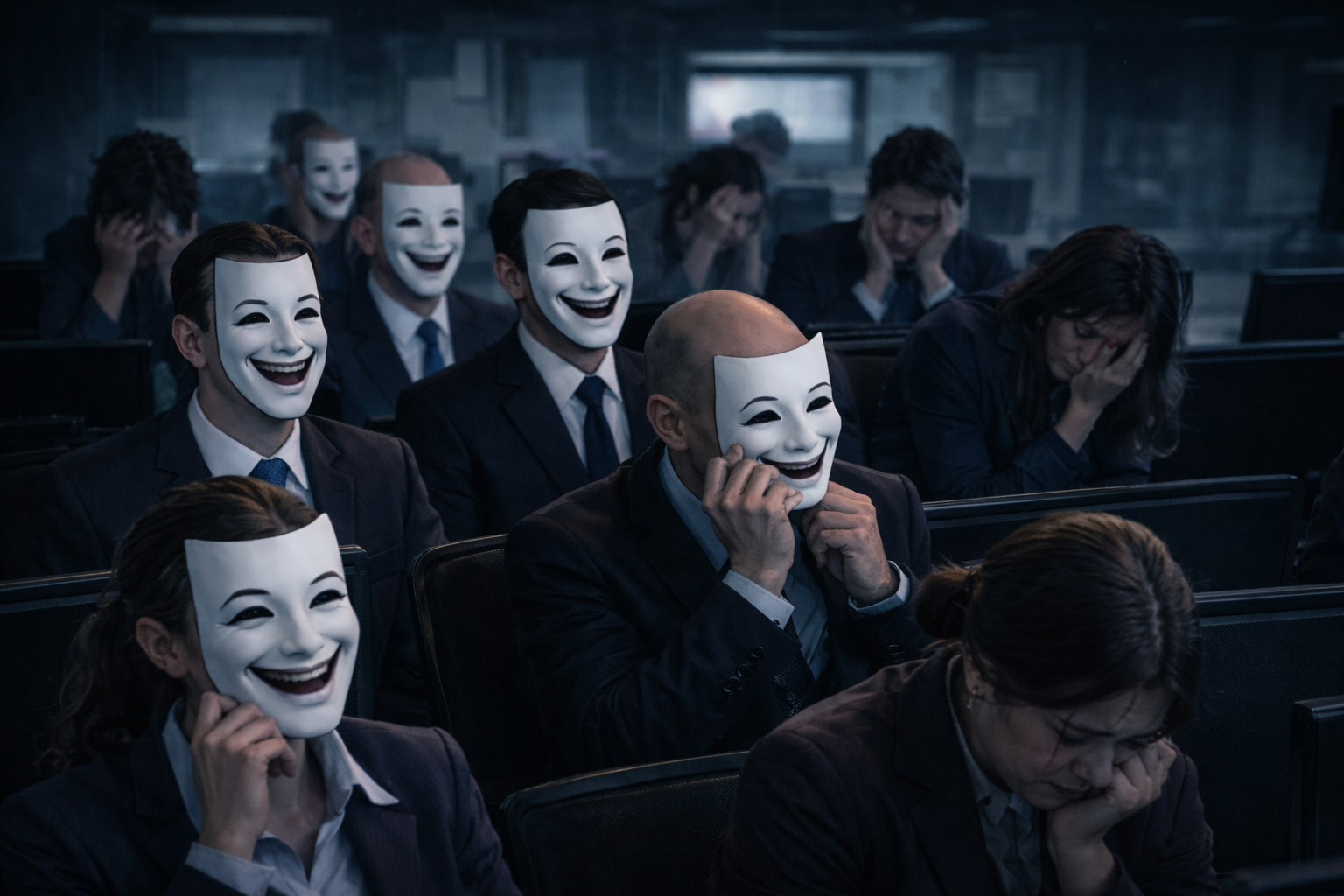
There is a version of performance that masquerades as mental health.
You keep showing up.
You perform competence, calm, productivity — not because things are going well, but because you believe other people shouldn’t have to carry your instability. Your drama feels like an unfair tax. So you manage it privately and perform publicly.
In that sense, performance becomes care — or at least consideration.
But I’m not sure it stops there.
Because the same logic quietly reinforces something else: the idea that what matters is not what is real, but what is legible in the moment. What fits. What doesn’t interrupt the flow. What can be consumed without discomfort.
We tolerate honesty in small doses, with trusted people, and even then it erodes relationships over time. Negativity accumulates interest. So we learn to edit ourselves — not out of deceit, but out of social hygiene.
And yet this selective visibility looks uncomfortably similar to the culture we claim to criticize.
A culture that rewards the loudest voice in the room.
That confuses coherence with strength.
That prefers theatrical accomplishment to sustained complexity.
If we accept performance as a necessary coping mechanism — something we owe others — can we really be surprised when the same instinct scales up? When people vote for clarity over truth, volume over nuance, reassurance over responsibility?
I’m not convinced this is hypocrisy.
It might be consistency.
The discomfort comes from realizing that the line between emotional self-regulation and collective spectacle is thinner than we’d like — and that both are driven by the same desire: to keep things moving, even if something essential gets left out of the frame.